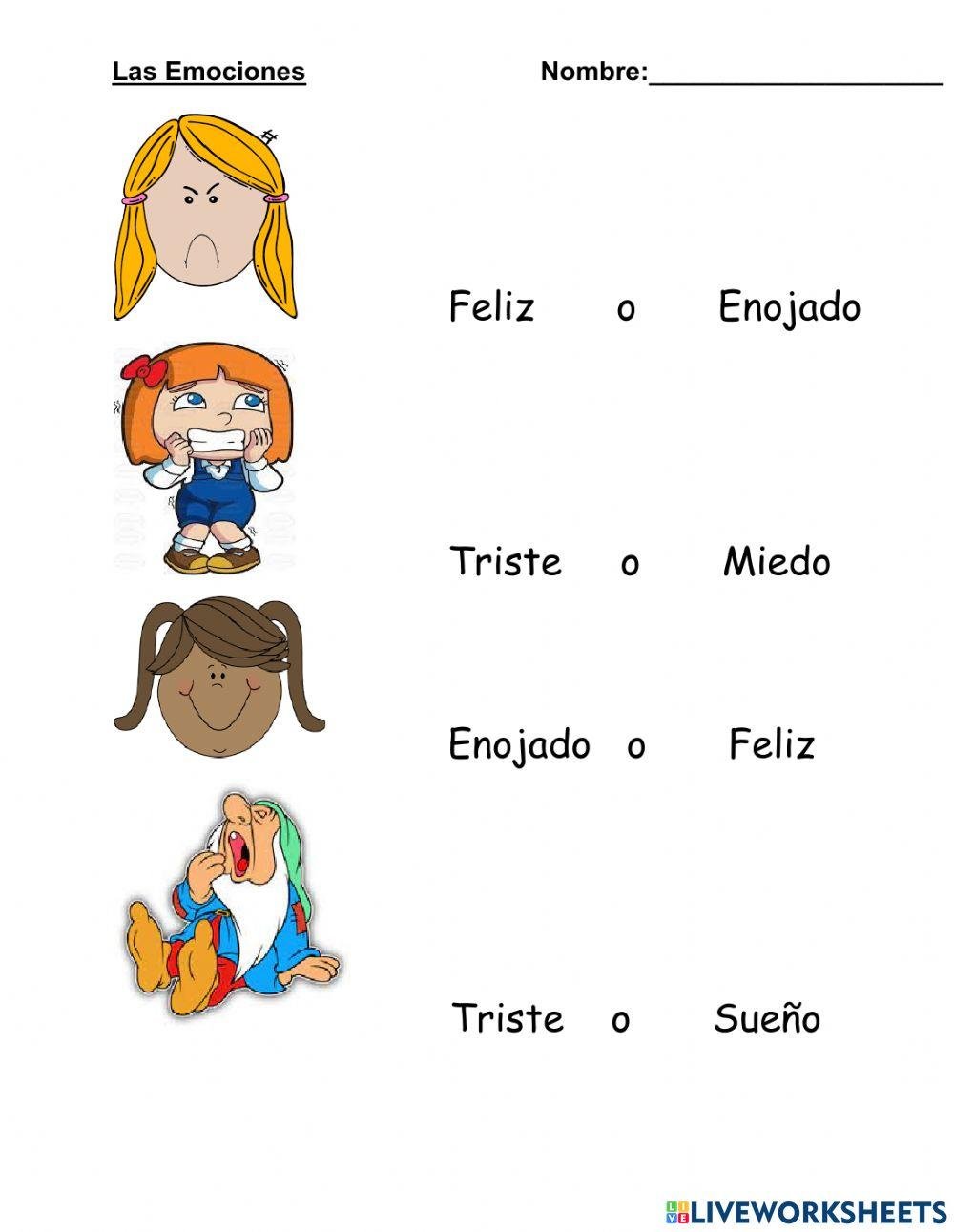
Ever felt like you're speaking Spanish, but not truly connecting? The language barrier often feels less like a wall of grammar and more like a haze around our deeper thoughts and emotions. That's where removing abstract concepts & feelings in Spanish becomes your superpower. It’s not about avoiding complexity, but about mastering the precise vocabulary, versatile verbs, and nuanced cultural cues that transform vague internal states into clear, relatable expressions. By doing so, you don't just speak Spanish; you genuinely communicate, building bridges to authentic understanding and stronger relationships.
This guide is your roadmap to articulating your inner world with confidence, precision, and a touch of local flair.
At a Glance: Key Takeaways
- Master the Core Verbs:
Estar(temporary states) andsentirse(personal feelings) are your primary tools for expressing "I feel." - Gender Matters: Most emotional adjectives (e.g., cansado/a, orgulloso/a) change endings to match the subject's gender and number.
- Beyond the Basics:
Tener(to have) anddar(to give) unlock more natural, idiomatic expressions for specific emotions. - Cultural Context is Crucial: Spanish-speaking cultures often express emotions more openly, using gestures, affectionate phrases, and even diminutives to add nuance.
- Practice Makes Perfect: Immerse yourself in authentic media and conversations to truly internalize emotional expressions.
Why Bridging the Emotional Gap in Spanish Matters
Think about your daily life. How often do you express joy, frustration, concern, or excitement? These aren't just polite pleasantries; they're the bedrock of human connection. When you can articulate your feelings in Spanish, you move beyond basic transactions and into meaningful interactions. You can comfort a friend, share your excitement about a trip, or politely express a boundary.
Many learners grapple with making their internal, often abstract, feelings tangible in a new language. How do you convey that specific shade of "tired but also a little bit bummed out" without sounding like a robot? The good news is that Spanish offers incredibly precise and culturally rich ways to do just that. It helps you take that nebulous feeling and give it a clear linguistic form, effectively "removing the abstract" and making it concrete.
Building Your Emotional Toolkit: Core Vocabulary
The foundation of expressing feelings lies in knowing the right words. Many adjectives describing emotions in Spanish agree in gender and number with the subject they describe. So, feliz (happy) or triste (sad) stay the same for both masculine and feminine subjects, but emocionado (excited, masculine) becomes emocionada (excited, feminine).
Let's stock your vocabulary with essential emotion words:
Positive Emotions to Share
- Feliz: Happy.
- Estoy muy feliz porque aprobé el examen. – I’m very happy because I passed the exam.
- Contento/a: Content, pleased. (Often interchangeable with feliz, but can imply a calmer happiness.)
- Emocionado/a: Excited.
- Estoy emocionada por mi viaje a España. – I’m excited about my trip to Spain.
- Orgulloso/a: Proud.
- Mi madre está orgullosa de mí. – My mother is proud of me.
- Tranquilo/a: Calm, peaceful.
- Después de meditar, me siento tranquilo. – After meditating, I feel calm.
- Alegre: Joyful, cheerful. (Describes a more inherent state of cheerfulness.)
- Enamorado/a: In love.
- Estoy enamorado de ti. – I’m in love with you.
Negative Emotions to Express
- Triste: Sad.
- Hoy me siento triste sin razón. – Today I feel sad for no reason.
- Enfadado/a: Angry. (Synonyms include molesto/a, bravo/a).
- Mi hermano está enfadado porque perdió su teléfono. – My brother is angry because he lost his phone.
- Frustrado/a: Frustrated.
- Estoy frustrado con mi progreso en español. – I’m frustrated with my progress in Spanish.
- Decepcionado/a: Disappointed.
- Me siento decepcionado con los resultados. – I feel disappointed with the results.
- Cansado/a: Tired.
- Estamos cansados después de trabajar todo el día. – We are tired after working all day.
- Estresado/a: Stressed.
- Avergonzado/a: Ashamed, embarrassed.
- Preocupado/a: Worried.
- Aburrido/a: Bored.
- Asustado/a: Scared, frightened.
Remember to always adjust the adjective's ending for gender and number! Una mujer cansada (a tired woman) vs. Un hombre cansado (a tired man).
Mastering "I Feel": Estar vs. Sentirse
In English, "I am happy" and "I feel happy" are often interchangeable. In Spanish, while both estar and sentirse translate to "I feel" or "I am" in emotional contexts, they carry subtle yet important distinctions that help remove the abstractness from your statement.
Using Estar + Adjectives: The Go-To for Temporary States
Estar is the most common verb for expressing temporary emotional states. Think of it as describing how you are right now, in this moment. It's practical, direct, and frequently used in everyday conversation.
- Structure: Subject +
estar(conjugated) + adjective - Examples:
- Estoy feliz. (I am happy.) – A straightforward statement about your current mood.
- Está triste. (He/She is sad.) – Describing someone's current state.
- Estamos cansados. (We are tired.) – A general statement about a shared temporary feeling.
- Estás aburrido? (Are you bored?) – A casual way to inquire about someone's current feeling.
Using Sentirse (Reflexive) + Adjectives: A More Personal Touch
Sentirse (to feel oneself) is a reflexive verb that adds a slightly more personal, introspective, or even nuanced layer to expressing emotions. When you use sentirse, you're emphasizing the personal experience of the feeling, almost as if you're checking in with your internal state. It's often used when reflecting on your emotions or when the feeling is more profound or requires introspection.
- Structure: Subject + reflexive pronoun (
me,te,se,nos,os,se) +sentir(conjugated) + adjective - Examples:
- Me siento cansado/a. (I feel tired.) – This can imply a deeper sense of fatigue than just Estoy cansado.
- Nos sentimos emocionados. (We feel excited.) – Highlighting a shared, internal sense of excitement.
- Se siente frustrada con su trabajo. (She feels frustrated with her job.) – Emphasizing her personal experience of frustration.
- ¿Cómo te sientes hoy? (How do you feel today?) – A common, more personal way to ask about someone's well-being.
The Distinction: While often interchangeable, estar describes the observable state, and sentirse describes the internal experience of that state. Choosing sentirse can add a touch more empathy or vulnerability to your expression, making your communication richer.
Beyond Estar and Sentirse: The Versatility of Tener and Dar
To truly remove the abstractness from emotional expressions, you need to go beyond the "to be" verbs. Spanish often uses tener (to have) for certain emotional or physical states that English uses "to be," and dar (to give) to describe how something causes an emotion.
Using Tener (To Have): For Specific "Feelings"
For specific emotional states, particularly those expressed as nouns in Spanish, tener is your verb. This construction is incredibly common and natural.
- Examples:
- Tengo miedo. (I am scared, literally "I have fear.")
- Tienes frío? (Are you cold?, literally "Do you have cold?")
- Tengo hambre. (I am hungry, literally "I have hunger.")
- Tengo vergüenza. (I am ashamed/embarrassed, literally "I have shame.")
- Tengo ganas de... (I feel like..., I want to..., literally "I have desires of...")
Using Dar (To Give): For Emotional Reactions
Dar is fantastic for explaining what causes an emotional reaction, making the abstract cause-and-effect relationship concrete.
- Structure: (Something) +
dar(conjugated) + indirect object pronoun (me,te,le,nos,os,les) + noun (emotion) - Examples:
- Me da alegría verte. (Seeing you makes me happy, literally "It gives me joy to see you.")
- Le da miedo hablar en público. (Speaking in public makes him/her scared.)
- Nos da vergüenza pedir dinero. (Asking for money makes us ashamed.)
- Esta situación me da rabia. (This situation makes me furious, literally "This situation gives me rage.")
Navigating Conversations: Asking How Someone Feels
When you're ready to connect, knowing how to inquire about someone's emotional state is key.
- ¿C��mo estás? – The most common, casual, and general "How are you?" It can refer to physical or emotional well-being.
- ¿Cómo te sientes? – A more personal and introspective "How do you feel?" This specifically asks about their internal state.
- ¿Qué te pasa? / ¿Qué te sucede? – "What's wrong?" or "What's happening to you?" These are informal and often imply concern, used when you sense something is amiss. It’s also used by medical professionals.
- ¿Tú estás enojado? – You can also ask directly: "Are you angry?"
Adding Nuance: Intensifying and Softening Emotions
Just like in English, you don't always feel "happy" or "sad"—sometimes you're really happy or a little sad. Adverbs help you fine-tune your emotional expressions, further removing the abstractness of a simple adjective.
Maximizing Feelings
- Muy: Very
- Me siento muy emocionada. – I feel very excited.
- Bastante: Quite
- Estoy bastante preocupado. – I am quite worried.
- Realmente: Really
- Realmente me duele. – It really hurts me.
- Demasiado: Too much (can imply an excessive amount)
- Estoy demasiado cansada para salir. – I'm too tired to go out.
Minimizing or Softening Feelings
- Un poco: A little bit
- Estoy un poco deprimida. – I am a little depressed.
- Algo: Somewhat, a bit (less emphasis than un poco)
- Me siento algo cansado hoy. – I feel somewhat tired today.
Explaining the "Why": Using Porque
To complete your emotional expression and make it fully concrete, explain the reason behind your feeling using porque (because):
- Estoy alegre porque hoy es mi cumpleaños. – I am happy because today is my birthday.
- Me siento frustrado porque no entiendo la lección. – I feel frustrated because I don't understand the lesson.
Speaking Like a Native: Common Phrases and Idioms
Beyond single words and grammatical structures, Spanish is rich with idiomatic expressions that paint vivid pictures of emotional states. Incorporating these makes your Spanish sound much more natural and expressive.
- ¡Qué alegría verte! – How great to see you! (Literally, "What joy to see you!")
- Me da mucha rabia. – It makes me so mad. (Literally, "It gives me much rage.")
- Estoy en las nubes. – I’m on cloud nine. (Literally, "I am in the clouds.")
- ¡No lo puedo creer! – I can’t believe it!
- Estoy de mal humor. – I’m in a bad mood.
- Estar de buen humor. – To be in a good mood.
- No estoy para nadie. – I'm not in the mood to deal with anyone.
- Me muero de ganas de... �� I'm dying to... (e.g., Me muero de ganas de verte. - I'm dying to see you.)
- Tener el corazón roto. – To have a broken heart.
- Echar de menos / Extrañar. – To miss (someone or something).
- Te echo de menos. – I miss you.
- Estar harto/a de... – To be fed up with...
- Estoy harto de la situación. – I'm fed up with the situation.
These phrases don't just state an emotion; they evoke it, adding color and depth that simple adjectives alone can't provide.
The Unspoken Language: Cultural Insights into Spanish Emotions
To truly excel at removing abstract concepts & feelings in Spanish, you must embrace the cultural context. Spanish-speaking cultures often express emotions more openly and directly than many English-speaking cultures, making non-verbal cues and specific linguistic habits essential.
- Openness and Directness: Don't shy away from expressing how you feel. While there's always a time and place, genuine emotional expression is often valued and expected. Unlike some cultures where "How are you?" is a mere formality, in Spanish-speaking countries, a more genuine response is often anticipated.
- Physical Gestures and Facial Expressions: Emotions are often amplified by body language. Warm hugs (abrazos), expressive hand gestures, and animated facial expressions are common. Observing these cues in native speakers will significantly enhance your understanding and expression.
- Affectionate Phrases (Even for Acquaintances): It's common to hear affectionate terms even among people who aren't intimate. Phrases like mi vida (my life), cariño (darling), or guapo/a (handsome/beautiful) are used broadly. This warmth extends to emotional support as well.
- The Power of Diminutives: Spanish diminutives (
-ito/a,-cito/a) don't just mean "small"; they can soften emotions, add endearment, or express a gentle qualification. - Estoy un poquito cansado. – I'm a little bit tired (softer than Estoy un poco cansado).
- Espera un momentito. – Wait just a moment (softer, more patient).
- Greetings and Genuine Responses: When someone asks ¿Cómo estás? or ¿Cómo te sientes?, they often genuinely want to know. While you don't need to unload all your woes, a simple, honest answer like Estoy bien, gracias, ¿y tú? (I'm well, thanks, and you?) or Un poco cansado, pero contento (A little tired, but happy) is appropriate.
- Regional Variations: The tone and intensity of emotional expression can differ. Spain might be perceived as more direct and passionate, while Mexico and many Latin American countries might favor a slightly softer, more indirect approach, especially in formal settings. Watching TV shows and movies from different regions, as suggested below, will make you aware of these nuances.
Putting It All Together: Practical Tips for Practice
Reading about emotions is one thing; feeling and expressing them naturally is another. Here’s how to make these concepts stick and integrate them into your active Spanish.
- Watch Spanish TV Shows and Movies: This is perhaps the best way to see emotions in action. Pay close attention to how characters express joy, sadness, anger, and love. Observe their cultural nuances, tones, and gestures.
- Consider La Casa de Papel (Spain), Club de Cuervos (Mexico), or Envidiosa (Argentina) for modern contexts.
- Literary adaptations like Cien años de soledad (Colombia) can offer deeper, often more dramatic emotional landscapes.
- Listen to Spanish Music and Podcasts: Song lyrics are rich with emotional vocabulary and poetic expressions of feelings. Podcasts like Españolistos or No Hay Tos often discuss daily life, where emotions naturally surface.
- Practice with a Language Partner or Tutor: Engage in role-playing scenarios. Discuss your real-life feelings. A tutor can provide personalized feedback on your accuracy, tone, and cultural appropriateness. They can help you remove the abstractness from your own internal feelings by guiding you to the right Spanish words and phrases.
- Engage in Online Communities and Social Media: Follow Spanish-speaking influencers or accounts dedicated to language learning (e.g., Español con Juan, María Español). Read comments, participate in discussions, and try expressing your reactions to content in Spanish.
- Keep an "Emotion Journal" in Spanish: Each day, write a few sentences about how you felt and why.
- Hoy me siento muy feliz porque salió el sol.
- Estoy un poco frustrado con mi trabajo esta semana.
This active recall solidifies your vocabulary and grammatical structures.
Clarifying Key Distinctions: Estar vs. Ser for Emotional States
While we've focused on estar and sentirse for temporary emotions, it's crucial to remember the fundamental difference with ser (to be). This helps avoid common pitfalls and ensures you're precisely removing the abstract confusion between temporary feelings and inherent traits.
Estarfor Temporary States and Emotions: Estoy cansado. (I am tired right now.) Ella está feliz hoy. (She is happy today.)Serfor Permanent Characteristics or Personality Traits: Soy feliz. (I am a happy person – indicating a personality trait.) Ella es tímida. (She is shy – indicating a consistent characteristic.)
Using ser with an emotion adjective implies that the emotion is a fundamental part of someone's personality. For instance, Soy aburrido means "I am a boring person," whereas Estoy aburrido means "I am bored." This distinction is vital for accurate communication.
Speaking of clarity and removing obstacles in communication, sometimes you might need to express the act of getting rid of something, whether physical or metaphorical. For comprehensive guidance on how to articulate that, you might find it useful to learn to say remove in Spanish.
Your Path to Deeper Connection
Mastering the art of expressing abstract concepts and feelings in Spanish is more than just a linguistic exercise; it's a journey toward deeper empathy, stronger relationships, and a richer understanding of diverse cultures. By arming yourself with the correct vocabulary, versatile verbs like estar, sentirse, tener, and dar, and a keen awareness of cultural nuances, you transform your Spanish from functional to truly fluent.
No longer will you be held back by the abstractness of an emotion you can't quite articulate. Instead, you'll possess the tools to convey your inner world with confidence and precision, opening doors to more authentic and meaningful conversations. Start practicing today, and watch your connections flourish.